Power
- Voltage and frequency stability
- Step load and load rejection
- A/B source transfer sequence


Bidirvolt builds custom load bank systems that turn power and cooling uncertainty into measurable test data before data centers, generators, UPS systems and critical infrastructure go live.
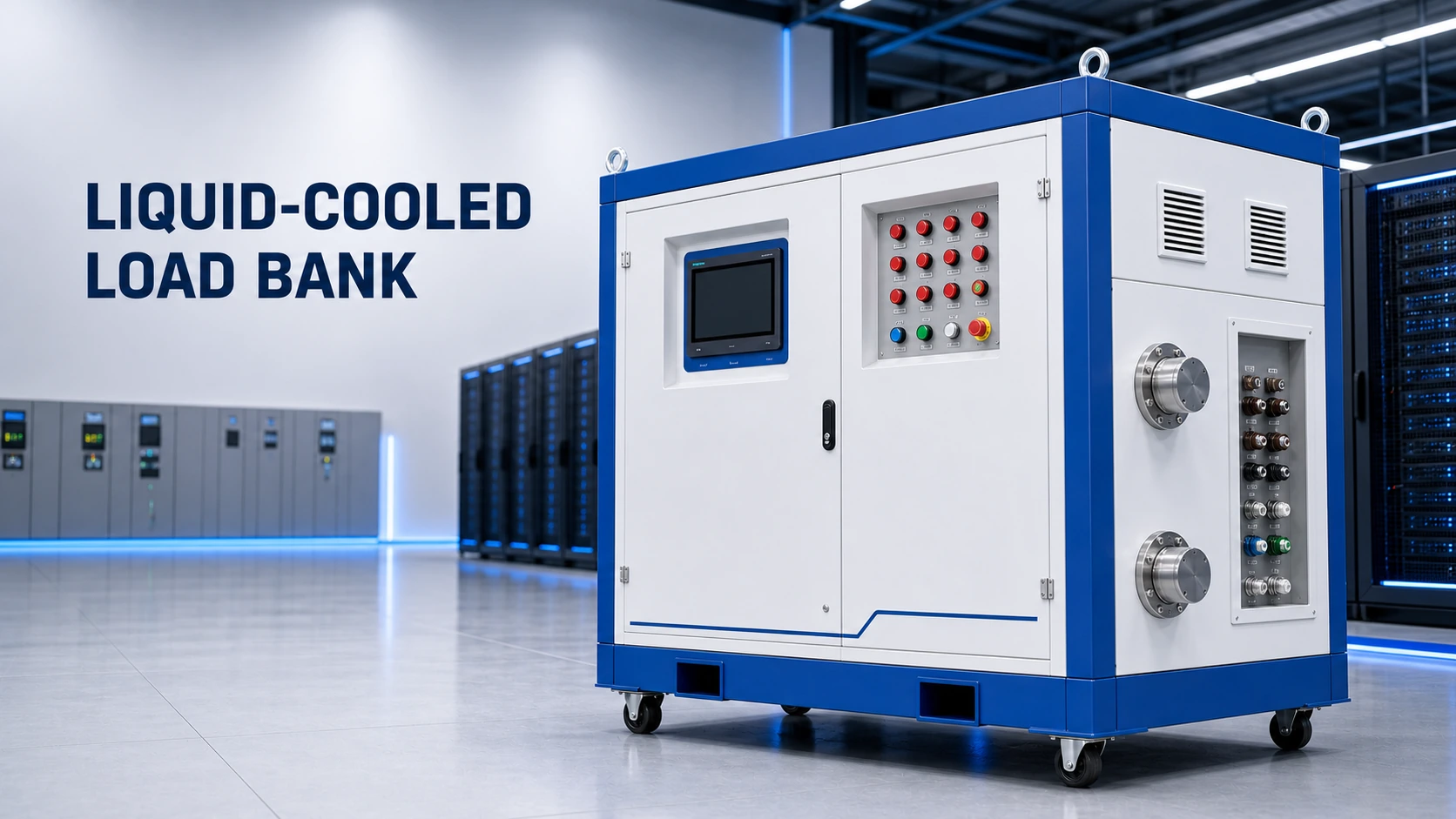
Use controlled electrical and thermal load before server deployment to prove UPS, generator, PDU, switchgear, CDU, cooling loop, control interface, and reporting behavior under real operating conditions.
Data center load bank testing is not only a power test. It validates whether power, cooling, control, and reporting systems can support real operating load before live equipment installation.
Traditional resistive testing verifies that a power path can carry kW. Modern data center load bank testing must also prove heat rejection, control interlocks, alarm behavior, logging, and handover data. The test boundary should be written before equipment arrives: connection point, voltage class, load step, holding time, coolant interface, shutdown condition, and report output.
For high-density halls, the weak point is often not one device. It is the interaction between electrical capacity, cooling response, controls, and the commissioning record.
Commissioning levels should move from component checks to integrated facility behavior. The load bank must support staged loading, sudden load application, load rejection, redundancy transfer, and endurance runs without relying on production IT hardware.
| Commissioning Level | Typical System Boundary | Load Bank Test Focus | Record Required |
|---|---|---|---|
| Level 1-2 | UPS, generator, switchgear, PDU, busway, CDU components | Nameplate check, wiring check, local control, protection setting | Inspection record, connection point, protection setting |
| Level 3 | Single power or cooling subsystem | Step load, full-load hold, load rejection, alarm verification | Voltage, current, kW, frequency, alarm event, operator notes |
| Level 4 | Integrated UPS, generator, PDU, switchgear, CDU and BMS/SCADA | Source transfer, A/B redundancy, emergency unload, control signal mapping | Timestamped event log, Modbus/SCADA points, pass/fail exceptions |
| Level 5 | Operational simulation before live IT handover | Endurance run, IT load simulation, heat load stability, reporting output | CSV raw data, PDF summary, trend curves, commissioning sign-off data |
Liquid cooling commissioning needs controlled heat load, not only electrical kW. A CDU may pass a no-load inspection, then show flow imbalance, pressure drop, valve delay, or alarm logic gaps once heat is introduced into the loop.
For CDU testing, define rack heat target, coolant type, inlet/outlet direction, flow range, pressure limit, Delta T target, leak alarm behavior, and shutdown threshold. Export the test record before connecting GPU racks or other high-value IT equipment.
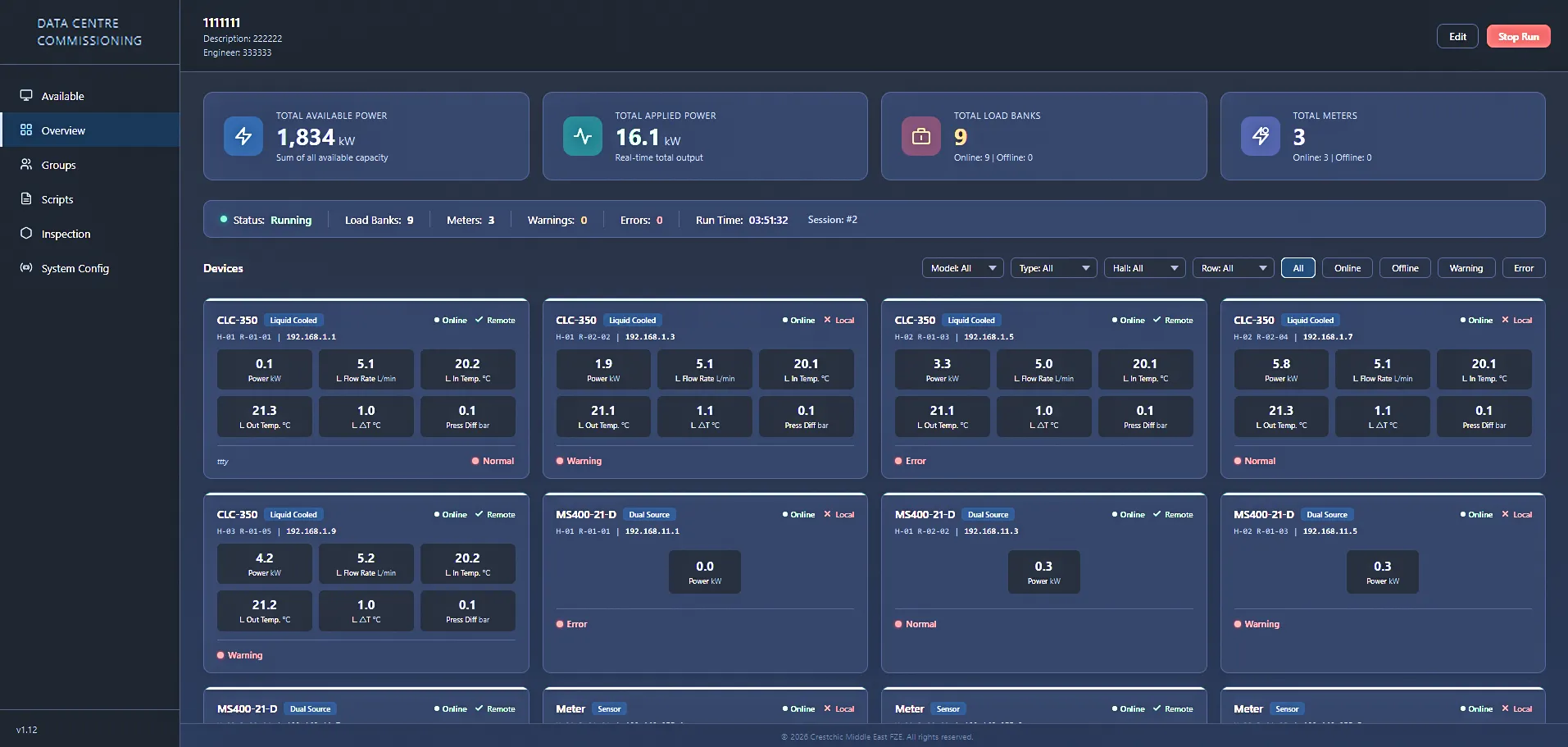
Select the load bank format from the test boundary, not from product category alone. Rack-level load simulation, CDU loop tests, and full-site generator tests need different power density, airflow or coolant handling, access route, and reporting setup.
Best for rack-level IT load simulation, CDU loop validation, PDU branch checks, cabinet heat profile, and data hall acceptance before server installation.
Best for generator acceptance, large UPS tests, switchgear load transfer, outdoor connection points, or projects requiring custom voltage, cooling interface, enclosure, and control logic.
| Decision Point | Rack-Mounted Format | Containerized / Custom Format |
|---|---|---|
| Test position | Inside data hall, rack row, CDU loop, PDU branch | Outdoor yard, generator area, main switchgear, central plant |
| Main validation | IT heat simulation, coolant behavior, rack-level electrical loading | High-capacity power acceptance, redundancy transfer, endurance run |
| Project constraint | Rack space, hose route, quick-connect type, CDU capacity | Access route, cable length, sound, weatherproofing, lifting method |
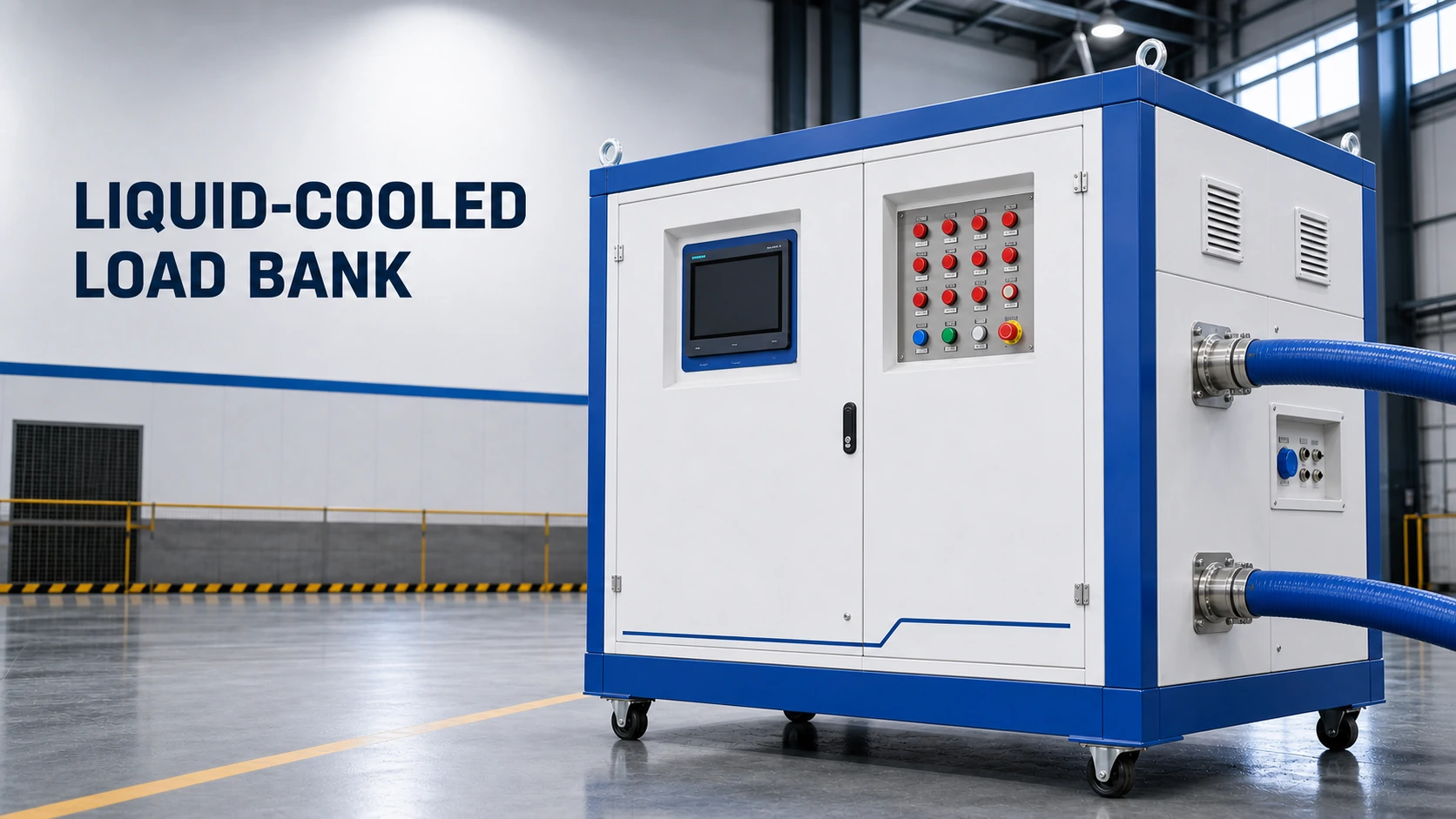
A useful commissioning report is not a screenshot. It should state the test boundary, load sequence, step duration, acceptance criteria, measured response, exceptions, and final handover notes. For repeatable projects, automated CSV and PDF export reduces argument after the site test.
At minimum, test UPS output, generator acceptance, PDU or busway loading, switchgear transfer, cooling response, control signals, alarms, emergency unload, and report export under staged load.
Use a liquid-cooled load bank when the commissioning scope includes CDU capacity, coolant flow balance, Delta T validation, leak alarm response, or high-density IT thermal load simulation.
The final report should include load step, duration, voltage, current, kW, kVA, frequency, coolant flow, pressure, inlet/outlet temperature, alarms, CSV raw data, PDF summary, exceptions, and sign-off notes.
Select by test boundary. Rack-mounted systems fit rack-level and CDU-loop validation. Containerized or custom systems fit high-capacity generator, UPS, switchgear, and outdoor connection tests.