
Data Center Commissioning Checklist for L5 and Load Bank Testing
A data center commissioning checklist should do more than confirm that equipment has been installed. It should prove that power, cooling, controls, alarms, and operating procedures work together under realistic load before IT equipment goes live.
This checklist focuses on the tests that matter most for high-density and AI-ready facilities: L5 integrated systems testing, PDU commissioning, heat load testing, CDU and chiller plant validation, and load bank planning.
Key point: Load banks are not only used to prove equipment capacity. In data center commissioning, they simulate electrical and thermal load so teams can expose integration weaknesses before servers are installed.
What Is Data Center Commissioning?
Data center commissioning is the structured process of verifying that power, cooling, life safety, controls, and monitoring systems perform as designed. Installation checks confirm that equipment is present and wired correctly. Commissioning asks a harder question: does the facility operate safely under realistic load and failure conditions?
For critical facilities, commissioning should include electrical load testing, heat load testing, control sequence verification, alarm validation, and documentation. For high-density racks and liquid cooling projects, this usually means testing UPS, PDU, generator, CDU, chiller, and cooling loop behavior before real IT equipment is placed at risk.
Data Center Commissioning Levels: L1 to L5
Many data center projects use a level-based commissioning model. The exact naming may vary by consultant or owner, but the logic is similar.
| Level | Purpose | Typical Checks |
|---|---|---|
| L1 | Factory or documentation verification | Submittals, factory tests, certificates, equipment records. |
| L2 | Site installation verification | Physical installation, wiring, labeling, access, safety checks. |
| L3 | Pre-functional testing | Startup checks, individual equipment readiness, controls point checks. |
| L4 | Functional performance testing | UPS, generator, PDU, CDU, chiller, and control system performance tests. |
| L5 | Integrated systems testing / IST | Full system operation under simulated load, failure modes, transfer sequences, and sign-off. |
Data center L5 testing is where load banks become especially valuable. They allow the commissioning team to simulate real IT load while validating how power and cooling systems work together.
Printable Data Center Commissioning Checklist
Use this checklist as a planning structure before L5 / IST testing. It is not a replacement for a project-specific method of procedure, but it helps identify the systems and evidence that should be ready before sign-off.
| Checklist Area | What to Confirm | Evidence to Record |
|---|---|---|
| Load bank plan | Capacity, voltage, connection points, heat rejection, cable route, safety boundaries. | Load bank specs, test plan, connection diagram, site risk review. |
| UPS and generator | Step-load response, transfer sequence, runtime, alarms, recovery behavior. | Load profile, voltage/frequency logs, alarm records, runtime data. |
| PDU commissioning | Breaker rating, branch circuit load, meter readings, panel balance, thermal scanning. | PDU load readings, IR scan records, breaker settings, sign-off sheet. |
| Heat load testing | Rack heat simulation, airflow or liquid loop response, hot spot risk, load distribution. | Rack load map, temperature logs, flow data, pressure data. |
| CDU / chiller plant | Flow rate, delta-T, pump response, redundancy, setpoints, failover behavior. | Trend logs, BMS screenshots, alarm records, deficiency list. |
| L5 / IST | Integrated power and cooling response under load and failure scenarios. | IST script, completed steps, issue log, owner sign-off. |
Heat Load Testing Checklist
Simulate Real IT Heat Load
Heat load testing uses load banks to simulate the electrical and thermal output of servers before real IT hardware is installed. For AI workloads and GPU racks, this is especially important because rack densities can exceed the assumptions used in older commissioning plans.
- Confirm target rack density and total kW load.
- Apply step loads instead of testing only one steady-state condition.
- Record supply/return temperature, flow rate, delta-T, pressure drop, and hot spot behavior.
- Check whether the cooling system recovers after load changes.
PDU Commissioning Checklist
PDU commissioning should confirm that power distribution equipment is safe, correctly metered, properly balanced, and ready for the intended IT load.
- Verify breaker ratings and branch circuit labeling.
- Apply staged load and compare meter readings to expected values.
- Check phase balance and branch circuit utilization.
- Perform thermal scanning under load where required.
- Confirm alarm thresholds, communication points, and BMS integration.
UPS and Generator Load Bank Testing Checklist
UPS and generator tests should prove that the backup power chain can support the facility under controlled load. This is where UPS load bank testing and generator load bank testing become part of the commissioning evidence.
- Apply 25%, 50%, 75%, and 100% load steps where the test plan requires them.
- Record UPS output voltage, frequency, current, runtime, and alarm events.
- Verify generator start, load pickup, voltage/frequency stability, and recovery.
- Test transfer sequences between utility, UPS, generator, and bypass modes.
- Document all deviations and retest after corrective action.
CDU and Chiller Plant Commissioning Checklist
For liquid-cooled or high-density data centers, commissioning must validate both the CDU and the upstream cooling plant. A chiller plant commissioning load bank or liquid-cooled rack load bank can help simulate the thermal load before IT equipment is installed.
- Confirm CDU startup sequence, pump operation, and setpoint control.
- Apply load steps and measure response time to cooling demand.
- Record flow rate, supply/return temperature, delta-T, and pressure drop.
- Test redundant pumps, backup CDU operation, and alarm response.
- Verify chiller plant stability during changing heat load.
Where Load Banks Are Used in Commissioning
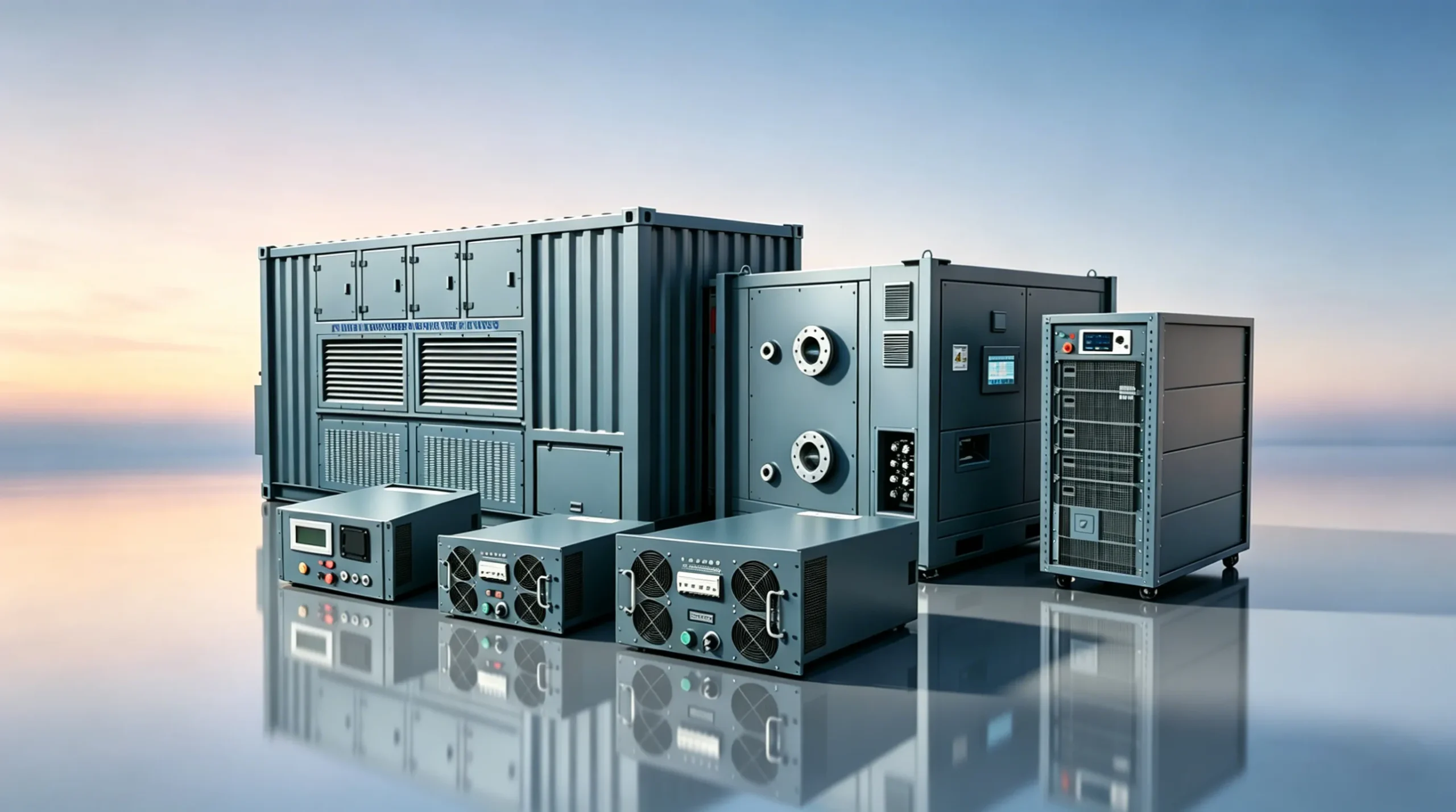
Load banks are used when the commissioning team needs controlled, repeatable load before real IT equipment is installed. Different commissioning tasks require different load bank types.
| Commissioning Task | Recommended Load Bank | What It Validates |
|---|---|---|
| Rack heat load testing | Rack-mounted liquid-cooled load bank | Rack-level heat simulation, CDU response, cooling loop performance. |
| UPS load testing | AC load bank or modular load bank | UPS output, runtime, transfer behavior, backup power stability. |
| Generator testing | Container load bank or outdoor load bank | Generator load pickup, stability, wet stacking prevention, recovery. |
| PDU commissioning | Air-cooled load bank or rack-level load bank | Branch circuit loading, phase balance, metering, thermal behavior. |
| CDU / chiller validation | Liquid-cooled load bank | Flow rate, delta-T, cooling capacity, pump response, failover. |
Need to plan load banks for commissioning? Review Bidirvolt's data center load bank testing solution or send your load profile, voltage, cooling method, and test duration for configuration support.
Request Load Bank ConfigurationHow These Tests Fit Into the Commissioning Sequence
Here is how load bank testing typically fits into a commissioning sequence before L5 / IST sign-off.
Data Center Commissioning Report Template
A usable commissioning report should make the test repeatable and auditable. At minimum, include:
- Test objective and acceptance criteria.
- Equipment under test and load bank specifications.
- Connection points, load steps, test duration, and safety boundaries.
- Measured voltage, current, frequency, temperature, flow, pressure, and alarm data.
- Issues found, corrective actions, retest results, and final sign-off.
Common Commissioning Mistakes to Avoid
- Testing at partial load only. Cooling and power systems behave differently at 30% and 100% load.
- Skipping thermal validation before server install. If cooling fails with live servers, the risk is hardware damage and schedule disruption.
- Skipping load bank testing entirely. Without load banks, commissioning relies too heavily on assumptions.
- Not preparing for L5 / IST. Integrated systems testing requires scripts, equipment readiness, team sign-off, and issue closure before the test day.
- Weak documentation. Commissioning records are compliance evidence and troubleshooting references.
- Not validating high-density AI loads. GPU server loads can expose bottlenecks that standard commissioning profiles miss.
Data Center Commissioning FAQ
What is data center L5 testing?
L5 testing, often called integrated systems testing or IST, verifies that major building systems work together under load. This can include UPS, generator, PDU, switchgear, BMS, CDU, chiller plant, and alarm sequences.
Where are load banks used in data center commissioning?
Load banks are used to simulate IT electrical and thermal load before servers are installed. They support UPS testing, generator testing, PDU commissioning, heat load testing, CDU validation, and L5 integrated systems testing.
What is included in PDU commissioning?
PDU commissioning usually includes breaker and circuit verification, staged load testing, phase balance checks, meter validation, alarm confirmation, and thermal scanning under load.
Can commissioning be done after servers are installed?
Some tests can run after IT equipment is installed, but it increases risk. Best practice is to complete load bank testing before server installation whenever possible.
What should a data center commissioning checklist PDF include?
It should include L1-L5 readiness checks, UPS/generator tests, PDU commissioning, heat load testing, CDU/chiller plant validation, load bank plan, issue log, report data, and sign-off fields.
Need Load Banks for Commissioning?
If your commissioning plan requires heat load testing, UPS load testing, PDU validation, CDU testing, or generator testing, Bidirvolt can help select the right rack-mounted, liquid-cooled, air-cooled, or container load bank configuration.
Send your target load, voltage, rack density, cooling method, test duration, and commissioning stage. The Bidirvolt engineering team can help match the load bank type to your test plan.
Send Commissioning Test Requirements