1. What Is a CDU Testing Load Bank?
A CDU testing load bank is a liquid-cooled load device used to replace real servers during data center liquid cooling commissioning. It applies a controllable heat load to the CDU and cooling loop so engineers can test whether the system can handle the expected thermal demand.
In simple terms, it is a server heat load simulator. Electrical power is converted into heat inside the load bank, and that heat is transferred into the coolant circuit. The CDU then removes the heat from the coolant and maintains the required supply temperature, flow and pressure.
A liquid cooled load bank for CDU testing is especially useful for AI data centers, high-density racks, direct-to-chip cooling systems and projects where server heat loads are too high to validate with traditional air-side testing only.
2. Why CDU Testing Matters Before Server Installation
CDU commissioning should happen before real servers are connected because liquid cooling problems can be expensive and disruptive once IT equipment is installed. A small setting error, wrong valve position, insufficient pump capacity or unexpected pressure drop can become a serious issue when the server rack reaches full load.
Common risks include:
- CDU settings that do not match the real server cooling demand
- Insufficient coolant flow at high heat load
- Abnormal pressure or excessive pressure drop in the cooling loop
- Unstable inlet and outlet temperature control
- Leak risk at hoses, fittings, manifolds or flange interfaces
- Low-flow, over-temperature or leak protection that does not respond correctly
- Server shutdown or project delay after live IT equipment is already on site
Testing with a CDU testing load bank gives the project team a controlled way to increase heat load, monitor the CDU response and adjust system settings before server deployment. This is why CDU commissioning and server heat load simulation are now important parts of liquid-cooled data center acceptance testing.
3. How a CDU Testing Load Bank Works
The working principle is straightforward. The load bank receives electrical power, converts that power into heat, transfers the heat into the coolant, and lets the CDU remove the heat through the liquid cooling system.
During testing, engineers usually apply heat load in steps. For example, the system may run at 25%, 50%, 75% and 100% load while the operator checks flow rate, pressure, temperature difference, alarm status and CDU stability. If the CDU cannot maintain the required temperature or if the pressure drop is outside the acceptable range, the issue can be corrected before servers are connected.
CDU Test Procedure Before Server Deployment
A CDU test should move from design confirmation to controlled heat load, alarm checks and data export. The procedure below gives commissioning teams a concise record plan before live servers are connected.
| Step | What to Do | What to Record |
|---|---|---|
| 1 | Confirm CDU design load | kW, flow rate, coolant type |
| 2 | Connect the load bank | Inlet/outlet, hose, valve position |
| 3 | Run 25%, 50%, 75%, 100% load | Temperature, pressure, flow |
| 4 | Check alarms and protection | Leak, low flow, over temperature |
| 5 | Export test data | Trend data, alarm records, report |
Need a CDU Testing Load Bank Configuration?
Send us your required kW, voltage, coolant type, flow rate, pressure range, and connection interface. Our engineering team can recommend rack-mounted or floor-standing CDU testing load bank options.
Request CDU Load Bank ConfigurationCDU Server Heat Load Simulation
A CDU testing load bank replaces live servers during commissioning. Instead of waiting for GPU or AI servers to arrive, engineers can apply controlled thermal load to the liquid cooling loop and verify whether the CDU can maintain stable supply temperature, pressure, and flow under staged load.
For rack-level simulation, see our rack mounted load bank for CDU testing.
Leak Detection, Check Valves, and Protection During CDU Testing
During CDU testing, engineers should verify leak detection, valve position, low-flow protection, over-temperature protection, and pressure response before connecting live servers. A CDU testing load bank makes this safer because abnormal conditions can be tested under controlled heat load.
| Check Item | Why It Matters |
|---|---|
| Leak detection | Prevents coolant damage near racks and IT equipment |
| Check valves | Helps confirm correct coolant direction and loop isolation |
| Low-flow alarm | Protects the load bank and CDU during insufficient circulation |
| Over-temperature alarm | Confirms protection under abnormal heat load |
| Pressure drop | Shows whether the CDU loop resistance is acceptable |
4. What Parameters Should Be Tested?
The main purpose of CDU testing is not only to reach a kW number. Engineers need to confirm that the cooling loop behaves correctly under load and that protection logic works when conditions become abnormal.
| Test Item | Why It Matters | What to Check |
|---|---|---|
| Heat Load | Simulates server thermal demand. | kW rating, step load, full-load stability. |
| Flow Rate | Confirms coolant circulation through the CDU and rack loop. | Required flow range, low-flow alarm, pump response. |
| Pressure | Checks loop stability and operating pressure limits. | Pressure range, pressure fluctuation, safety margin. |
| Pressure Drop | Shows whether loop resistance is within the CDU design range. | Supply/return pressure difference and manifold behavior. |
| Temperature | Validates heat removal and delta-T performance. | Inlet temperature, outlet temperature, CDU control response. |
| Leak Detection | Protects equipment, racks and the installation site. | Leak alarm, protection action, operator response. |
| Low-Flow Protection | Prevents unsafe operation when circulation is insufficient. | Alarm threshold, shutdown logic and reset process. |
| Over-Temperature Protection | Protects the load bank and cooling loop during abnormal heat conditions. | Temperature limit, alarm record and protection action. |
| Data Logging | Supports commissioning reports and customer acceptance documents. | Records, alarm history, trend data, Excel/PDF export. |
5. Rack-Mounted vs Floor-Standing CDU Testing Load Banks
CDU testing load banks are commonly designed as rack-mounted units or floor-standing units. The right choice depends on required power, rack layout, coolant connection, site space and whether the test is focused on one rack or a larger project loop.
Rack-Mounted Liquid Cooled Load Bank
A rack-mounted liquid cooled load bank is suitable for rack-level CDU testing and server heat load simulation. It can be placed close to the actual rack position and connected to the same type of coolant interface used by the server loop.
- Good for rack-level CDU commissioning
- Useful for manifold and rack loop checks
- Closer to real server installation conditions
- Suitable for 19-inch rack-style deployment
Floor-Standing Liquid Cooled Load Bank
A floor-standing liquid-cooled load bank is usually stronger for higher power ratings, larger coolant interfaces and project-level testing. During site commissioning, it is also easier to move, connect and service. This format is especially useful for full-power testing across the whole project and for validating the cooling tower performance of the data center cooling system.
- Good for larger kW requirements
- Works well with flange or custom hose interfaces
- Suitable for full-power project-level commissioning
- Useful for data center cooling tower performance testing
- Can be customized for project-specific workflows
For some data center projects, both formats may be useful. Rack-mounted units help simulate rack-level conditions, while floor-standing units can provide higher total thermal capacity for broader CDU validation, full-project heat load testing and cooling tower performance verification.
6. CDU Testing Load Bank vs Air-Cooled Load Bank
An air-cooled load bank releases heat into the surrounding air. It is useful for testing generators, UPS systems, PDUs and traditional air-cooled room capacity. However, it does not put heat into the liquid cooling loop.
A CDU testing load bank is different because the heat is transferred into coolant. This makes it more suitable for validating CDU performance, coolant flow, pressure, delta-T, temperature control and protection response in liquid-cooled environments.
Industry references make the same point in different ways: liquid-cooled load banks are used to simulate liquid-cooled server heat loads and validate pump performance, flow rate, delta-T and heat rejection capability before live IT equipment is connected.
7. How to Choose a CDU Testing Load Bank
Procurement teams should not choose a CDU testing load bank by kW rating alone. The electrical input, coolant type, flow rate, pressure range, interface and reporting requirements all affect whether the equipment will match the project.
Before sending an inquiry, prepare the following information:
| Requirement | Example |
|---|---|
| Power rating | 50kW, 250kW, 500kW, 600kW |
| Voltage | 400V AC |
| Frequency | 50Hz / 60Hz |
| Coolant | Water / glycol / water-glycol |
| Connection | Flange / custom interface |
| Installation | Rack-mounted / floor-standing |
| Control | HMI / PC software / remote control |
| Report | Excel / PDF export |
- Confirm required total heat load and load step control.
- Confirm voltage, phase and frequency, such as 400V AC, 50Hz or 60Hz.
- Confirm coolant type and coolant compatibility.
- Confirm required flow rate, operating pressure and maximum pressure.
- Confirm connection type, such as flange, hose, quick connector or custom interface.
- Confirm whether the unit should be rack-mounted or floor-standing.
- Confirm HMI, PC software, alarm records and Excel/PDF report export requirements.
8. What Can Be Customized?
CDU testing projects often have site-specific requirements. A standard load bank may not match the CDU interface, rack manifold, test report format or automatic workflow required by the commissioning team. For this reason, customization is often part of the selection process.
Enclosure and Dimensions
Rack-mounted, floor-standing, workshop test or site commissioning layouts.
Power Rating
Project-specific ratings such as 50kW, 250kW, 500kW, 600kW or other values.
Coolant Interface
Flange interface, hose connection, quick connector or custom inlet and outlet layout.
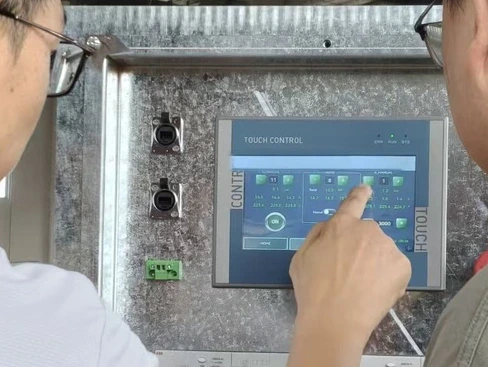
HMI and PC Software
English interface, monitoring screens, alarm records and operator controls.
Protection Functions
Leak detection, low-flow protection, over-temperature protection and over-current protection.
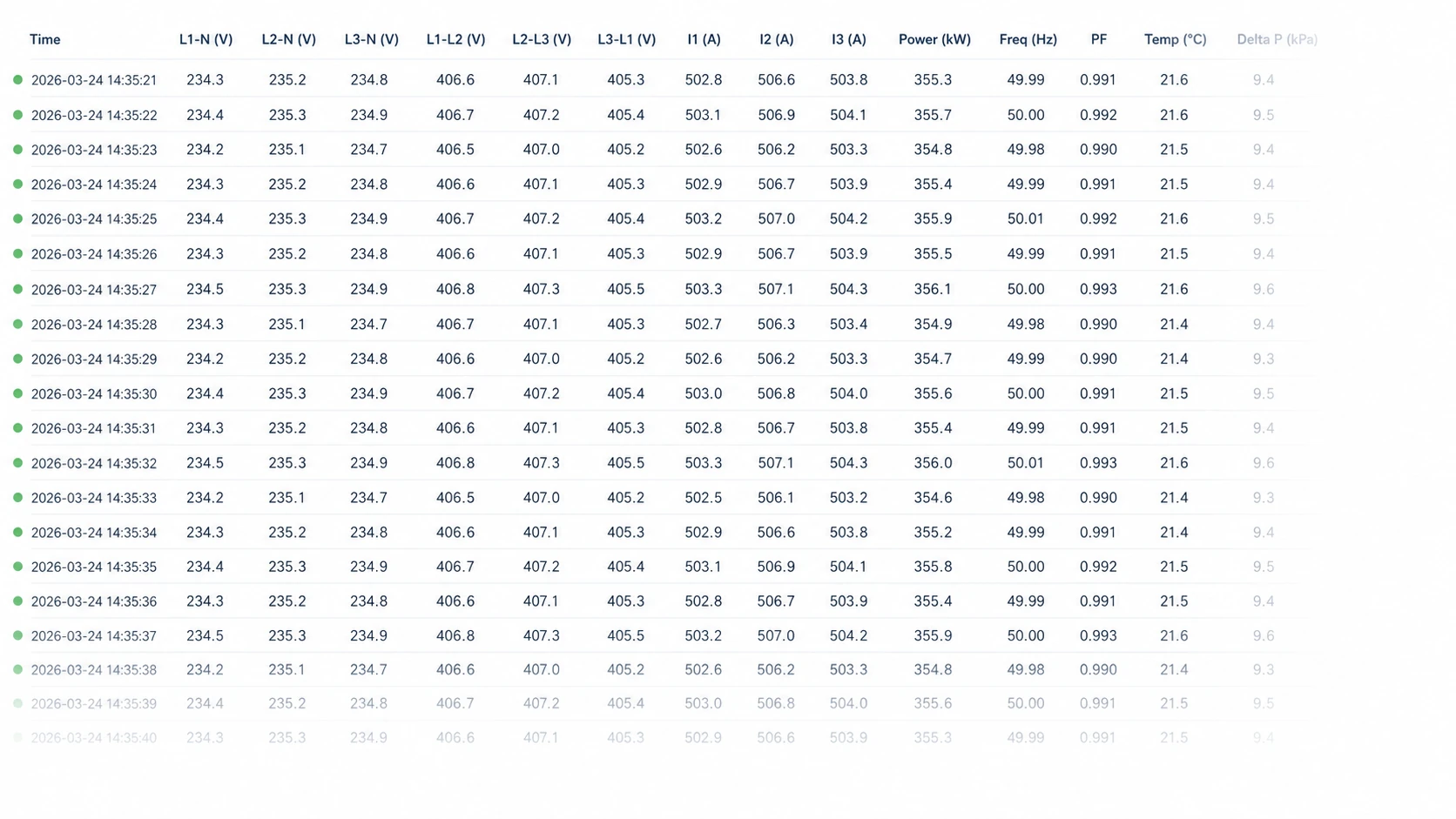
Report Export
Test data logging, alarm history, trend data and Excel/PDF report export.
9. Typical CDU Testing Workflow
A clear workflow helps engineers and project owners understand what will happen during commissioning. The exact process depends on the CDU, coolant loop and acceptance requirements, but a typical process includes the following steps:
- Confirm CDU and project requirements.
- Select load bank power rating and coolant interface.
- Confirm voltage, frequency, coolant type, flow and pressure range.
- Connect the load bank to the CDU loop.
- Check valves, hoses, fittings and leak detection.
- Run staged heat-load tests.
- Monitor flow, pressure, inlet temperature and outlet temperature.
- Record alarms and test data.
- Export the commissioning report.
- Adjust CDU settings before server deployment.
10. FAQ
What is a CDU testing load bank used for?
It is used to simulate liquid-cooled server heat load and test CDU performance before real servers are connected. It helps verify coolant flow, pressure, temperature control, alarms and heat removal capacity.
Is a CDU testing load bank the same as an air-cooled load bank?
No. An air-cooled load bank releases heat into the air. A CDU testing load bank transfers heat into the coolant loop, making it suitable for liquid cooling commissioning.
Can it simulate AI server heat load?
Yes. A properly designed liquid cooled load bank for CDU testing can simulate high-density server heat load by applying controlled kW into the coolant circuit.
What coolant can be used?
Common options include water, glycol and water-glycol mixtures. The final design should confirm coolant compatibility, temperature range, flow rate and material requirements.
Can the load bank be rack-mounted?
Yes. A rack-mounted liquid cooled load bank is suitable for rack-level CDU testing, manifold checks and server heat load simulation close to the actual installation position.
What data should be recorded during testing?
Typical records include heat load, flow rate, inlet temperature, outlet temperature, pressure, pressure drop, alarms, protection events and test time. Excel or PDF report export can be customized.
What information should I provide before requesting a quote?
Send the required kW, voltage, frequency, coolant type, flow rate, pressure range, connection type, installation format and control/report requirements.
Need a CDU Testing Load Bank Configuration?
Send us your required kW, voltage, coolant type, flow rate, pressure range, and connection interface. Our engineering team can recommend rack-mounted or floor-standing CDU testing load bank options.