A liquid cooled load bank is a testing device that removes heat through circulating coolant. It is commonly used in data centre cooling systems, CDUs, cooling towers, and high-power server thermal load simulation. Its core value is not "how much power it consumes" but rather its ability to transfer heat to the cooling system under test in a stable, controllable, and recordable manner.
1. Define the Test Target First
There are two main types of liquid cooled load banks on the market. The first is a floor-standing high-capacity liquid cooled load bank used for testing base or outdoor cooling towers, suitable for verifying the heat dissipation capacity of cooling towers, chilled water systems, and large-scale liquid cooling loops.
The second is a rack-mounted liquid cooled load bank, primarily used to simulate the thermal load of high-power servers inside a data hall. It is commonly used for CDU testing to verify the cooling system's heat exchange capacity, flow stability, and operational safety before servers are formally deployed.
Floor-Standing High-Capacity Liquid Cooled Load Bank
Better suited for outdoor cooling towers, testing bases, and large cooling loops. Focus on power capacity, piping flow rate, pressure range, and flange specifications during selection.
View Liquid Cooled Load Bank SolutionsRack-Mounted Liquid Cooled Load Bank
Better suited for CDU commissioning and server thermal load simulation. Focus on cabinet dimensions, QD quick-disconnect fittings, flow meters, temperature acquisition, and remote monitoring during selection.
View Rack Mounted Liquid Cooled Load Bank Solutions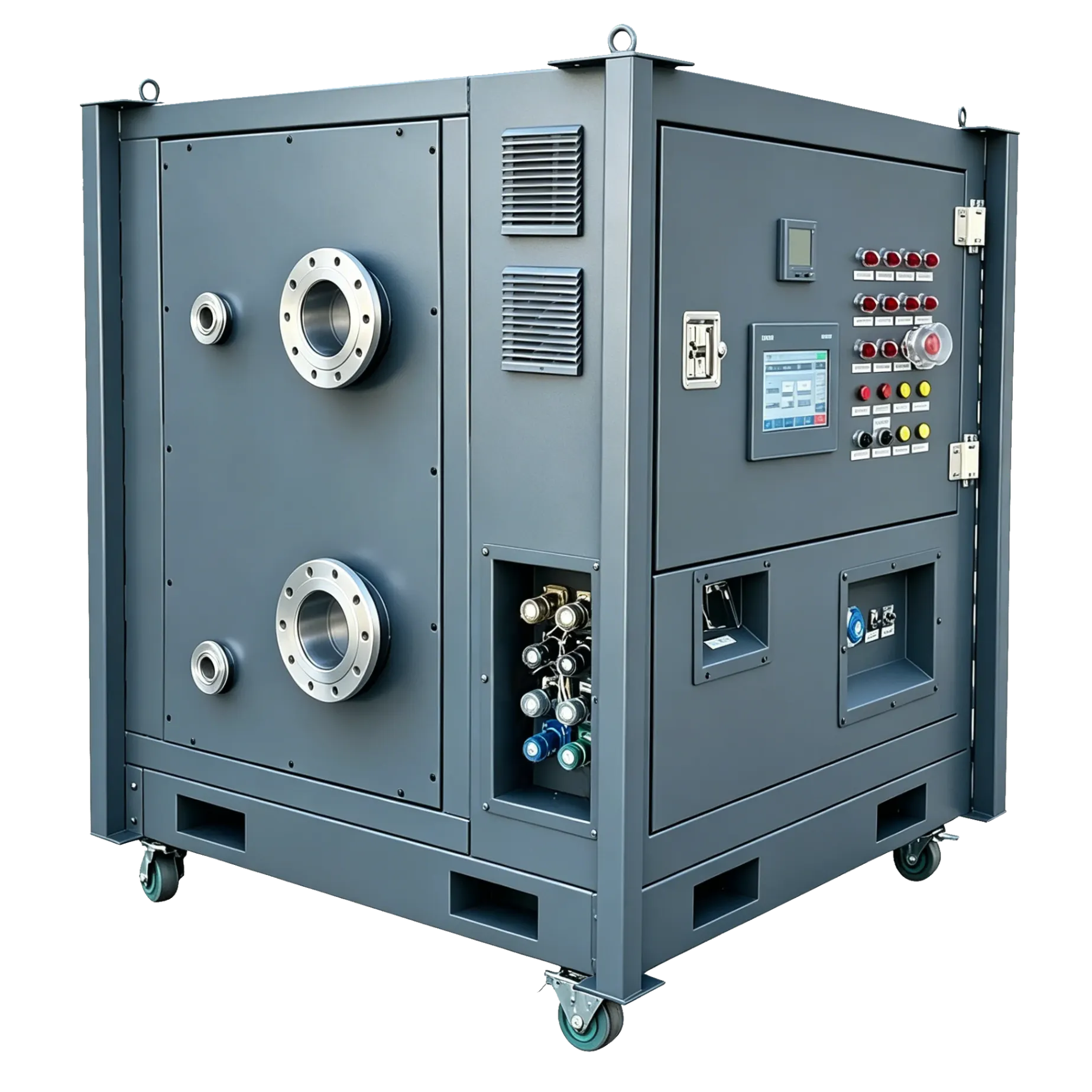
2. Confirm Key Technical Parameters
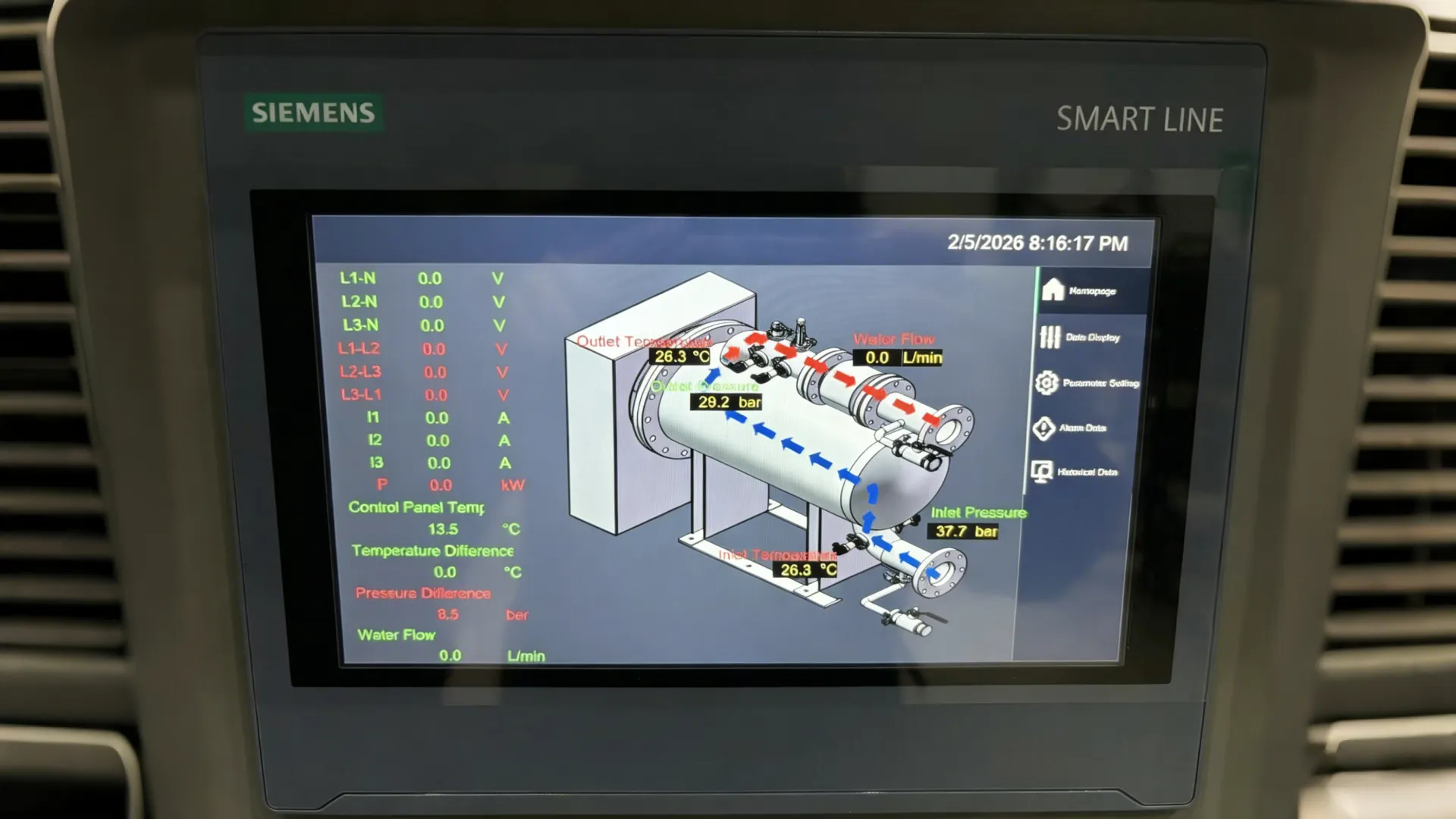
Key parameters of a liquid cooled load bank include rated power, voltage class, inlet and outlet water temperature, flow rate range, pressure range, and temperature control accuracy. Among these, the maximum pressure rating of the reservoir, temperature control range, and flow monitoring are particularly important.
For data centre projects, also confirm whether the equipment supports long-duration continuous operation and whether it has data logging, alarm recording, and test report export functions. This makes the testing process and results easier to trace during final acceptance.
| Selection Item | What to Confirm | Why It Matters |
|---|---|---|
| Power and Voltage | Rated power, voltage class, load step configuration | Determines whether the target thermal load and on-site power supply conditions can be covered |
| Pressure Range | Maximum reservoir pressure rating, piping pressure, protection thresholds | Prevents over-pressure, leakage, or false equipment protection trips during testing |
| Temperature Control Range | Inlet and outlet water temperature, temperature control accuracy, over-temperature protection | Affects cooling capacity verification and test data stability |
| Flow Monitoring | Flow rate range, flow meter accuracy, whether logging is required | Used to determine whether the cooling loop reaches the design flow rate |
| Data and Control | HMI, local control, remote supervisory system, communication protocol | Relates to on-site operational efficiency, data retention, and automated testing |
3. Confirm Cooling Medium and Interface Type
The common cooling medium for liquid cooled load banks is PG25, a propylene glycol water solution at a specific ratio. During selection, confirm whether the internal reservoir, piping, and related fittings are made of stainless steel to reduce corrosion, contamination, and long-term operational risks.
Interface type should also be confirmed based on site conditions. For outdoor cooling tower testing, flanged connections are typically used, requiring advance confirmation of flange standards, diameters, and piping directions. For indoor CDU connections, drip-free QD quick-disconnect fittings are more common, enabling fast connections and reducing leakage risk.
4. Do Not Overlook Safety Protection
A liquid cooled load bank should have basic safety alarm functions, such as over-temperature, over-pressure, low-flow, leakage, and electrical fault alarms. However, software alarms alone are not sufficient — hardware-level protection is equally critical.
5. Confirm Customization Needs Based on On-Site Conditions
The selection focus for a liquid cooled load bank is not limited to standard parameters — it is about whether the equipment can fully match the on-site testing process. Cooling tower water outlet configurations, flange dimensions, CDU quick-disconnect fittings, control modes, HMI displays, and flow monitoring can all affect whether the final test is completed smoothly.
Therefore, customisation capability is a critical factor in liquid cooled load bank procurement. For non-standard cooling towers, special CDU testing, pre-deployment server thermal load simulation, or projects requiring remote data logging, the following items should be clarified during the design phase.
| Item to Confirm | Customisation Focus |
|---|---|
| Test Environment | Confirm whether the test target is a cooling tower, CDU, or in-room server thermal load simulation; different environments affect equipment structure, interface positions, piping directions, and installation space. |
| Cooling Tower Interface | Confirm the cooling tower water outlet configuration, determine whether standard flanges can be used, and clarify flange standards, flange diameters, and piping connection directions in advance. |
| CDU Connection | Indoor CDU connections typically use drip-free QD quick-disconnect fittings. Confirm fitting specifications, hose length, flow rate range, and cabinet space. |
| Control and Data | Local HMI monitoring and operation is the baseline; if remote testing is required, confirm supervisory system, communication protocol, data acquisition, alarm recording, and test report export. |
| Interface and Flow | Confirm whether the interface operation logic and parameter display meet testing requirements; if the load bank does not control inlet flow, a flow meter can be added for real-time monitoring and logging. |
LBT Power can design customised load bank solutions based on project requirements for power, voltage, cooling method, interfaces, control logic, HMI display, and remote monitoring.
View Custom Load Bank SolutionsSummary
When selecting a liquid cooled load bank, first define the test target, then confirm power, pressure, temperature, flow rate, cooling medium, interface type, and safety protection. If the test target is a cooling tower, a floor-standing high-capacity liquid cooled load bank is typically more suitable; if the test target is a CDU or liquid-cooled server system, a rack-mounted liquid cooled load bank is more appropriate.
The right equipment is not just about having sufficient parameters — it must fully match the on-site testing process. For non-standard sites, customisation capability is often more important than any single parameter.
Frequently Asked Questions
What should be confirmed first when selecting a liquid cooled load bank?
Confirm the test target first. Cooling tower testing and CDU testing have distinctly different requirements for equipment structure, interface type, flow rate range, and control method.
What should be noted about the PG25 cooling medium?
Confirm whether the reservoir, piping, and related fittings are compatible with PG25, and prioritise stainless steel construction to reduce corrosion and contamination risk.
Why do liquid cooled load banks often require customization?
Because different projects have varying requirements for cooling tower water outlet configurations, flange diameters, QD quick-disconnect fittings, control modes, HMI displays, remote supervisory systems, and flow logging. Standard equipment may not directly cover all on-site processes.