Resistive Load Testing
Verify real kW output, cooling performance, fuel response, exhaust condition, and full-load operation.


Bidirvolt builds custom load bank systems that turn power and cooling uncertainty into measurable test data before data centers, generators, UPS systems and critical infrastructure go live.
Validate standby generators, diesel gen-sets, and backup power systems before the next outage. Bidirvolt load banks provide controlled resistive and resistive-reactive load for commissioning, maintenance, wet stacking prevention, and acceptance testing.
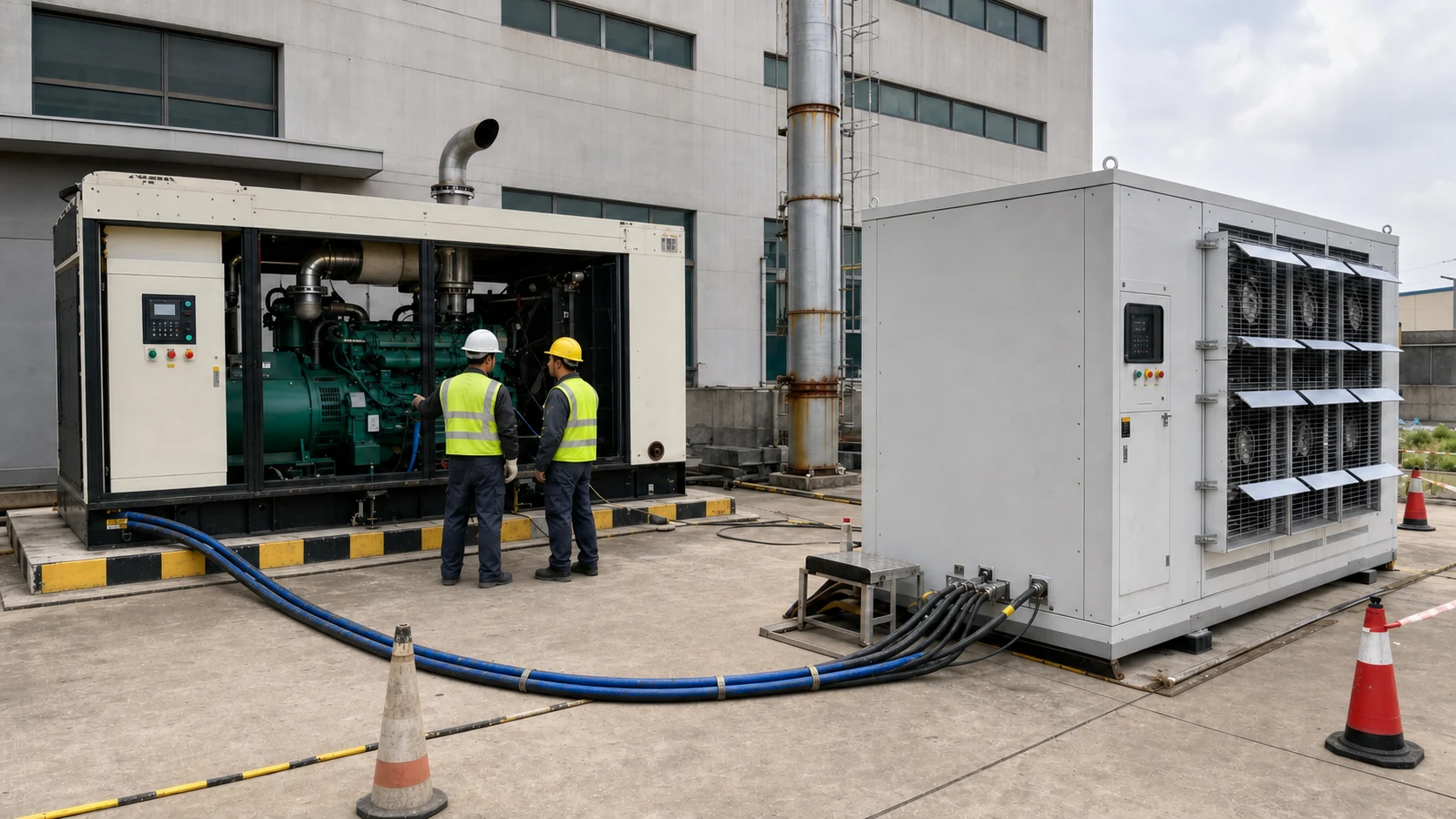
A generator that starts and idles is not proven. Real backup readiness requires measured load. A load bank lets engineers test the generator under repeatable conditions without depending on unstable building load or waiting for a real outage.
Confirm that the generator can accept staged load without voltage drift, frequency instability, or nuisance trips.
Apply sufficient load to diesel engines that run too long at light load and need higher combustion temperature.
Expose radiator, airflow, fuel delivery, governor, AVR, and control issues before the system is needed.
Bidirvolt generator load banks apply stable electrical load to the generator output, allowing the complete backup power chain to be tested under controlled kW or kVA conditions.
Verify real kW output, cooling performance, fuel response, exhaust condition, and full-load operation.
Test power factor, alternator response, voltage regulation, and kVA loading when project specifications require it.
Record load steps, voltage, current, frequency, alarms, and operating conditions for commissioning sign-off.
Use generator load banks for planned commissioning, periodic maintenance, rental fleet checks, and critical facility power readiness.
Prove emergency generator capacity before facility handover or live operation.
Apply planned load to reduce wet stacking and verify engine performance.
Validate generator, switchgear, ATS, UPS bypass, and distribution readiness.
Test units before deployment and after site return to confirm asset condition.
Commission temporary power packages before connecting mission-critical loads.
Run controlled load tests before shipment for generator packages and power modules.
Share the generator rating, voltage, test target, and site conditions. Bidirvolt can recommend a portable, trailer-mounted, stationary, or containerized load bank configuration.
| Parameter | What to Confirm | Common Options |
|---|---|---|
| Generator Rating | Required kW / kVA test load and overload requirement. | 100kW, 500kW, 1MW, 2MW, 5MW+ systems |
| Voltage / Frequency | Generator output voltage, phase, frequency, and connection point. | AC 400V, 480V, 600V, 6.6kV, 11kV, 50/60Hz |
| Load Type | Whether the test requires only kW or kW plus kVAr loading. | Resistive or resistive-reactive |
| Installation Type | Site access, transport method, test frequency, and weather exposure. | Portable, trailer, outdoor cabinet, containerized |
| Control and Reports | Local operation, remote control, data logging, and report export needs. | Touchscreen, PC software, Modbus, test report output |
A structured workflow helps reduce site risk and produce clear acceptance records.
Generator testing often happens outdoors, in plant rooms, on rental yards, or at critical facilities with limited shutdown windows. The load bank should match the site conditions as much as the generator rating.
Common questions about generator load bank testing and equipment selection.
A load bank applies controlled electrical load so the generator can be tested at known load levels before a real outage or site handover.
Resistive load banks are commonly used for kW testing. Resistive-reactive load banks are used when power factor, alternator response, or kVA loading must also be verified.
Yes. Applying sufficient load raises engine operating temperature and helps reduce wet stacking risk in diesel generators that often run at light load.
Send the generator rating, voltage/frequency, required load level, test duration, load type, site location, cable distance, and whether data logging or remote control is required.
Share your generator rating, voltage, site conditions, and test objective. Bidirvolt can recommend a suitable load bank configuration for commissioning, maintenance, rental fleet, or acceptance testing.